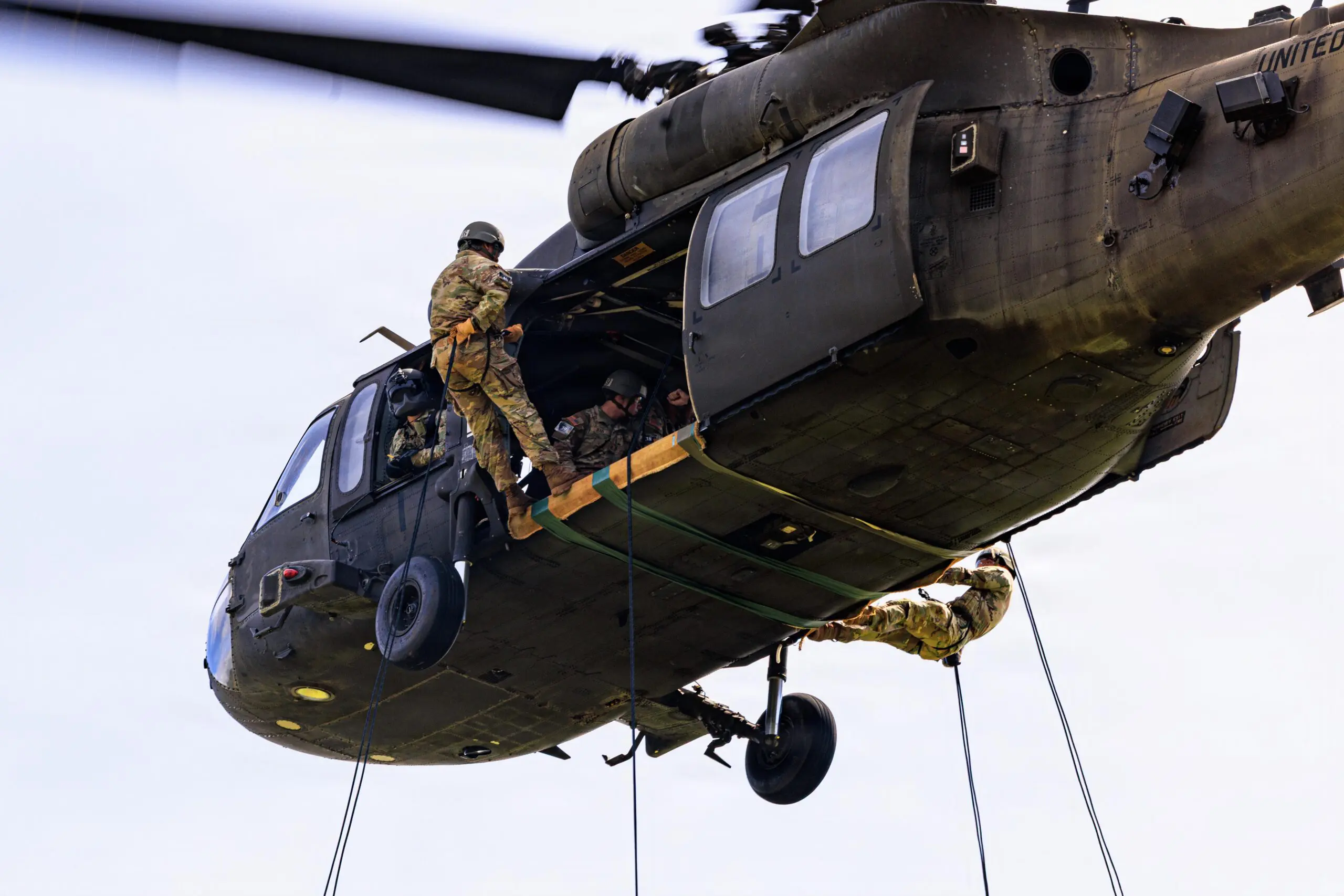
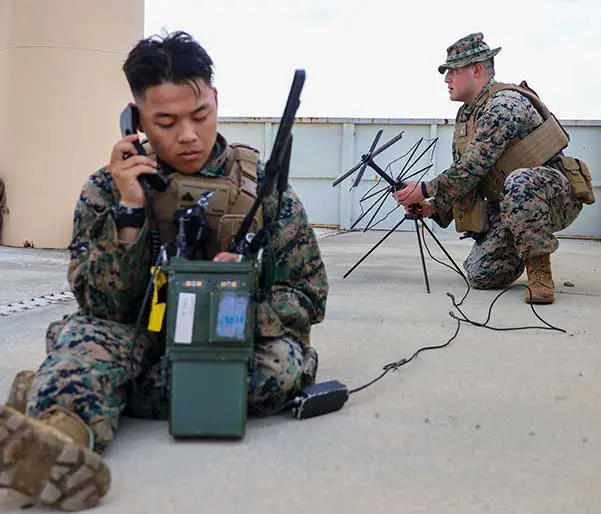
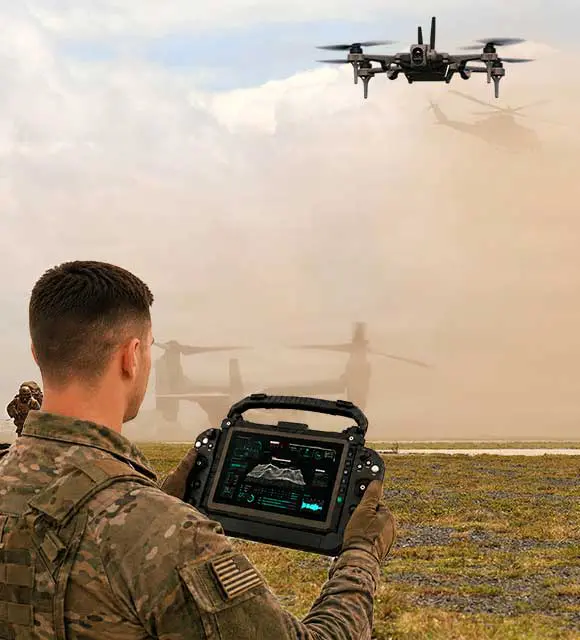
The Army’s Next Generation Command and Control initiative is changing how information moves across the battlefield.
NGC2 is replacing separate, function-specific command-and-control systems with an integrated architecture built around applications, data, infrastructure, and transport. Its common data layer is intended to connect information from the cloud to the tactical edge, giving Soldiers and commanders faster access to intelligence, fires, logistics, sustainment, and operational data.
In June 2026, the Army announced a common data-layer baseline that includes an edge-to-cloud data mesh, data federation, transformation tools, and support for applications, algorithms, private 5G, and edge-computing devices.
This is an important step toward faster, data-driven command and control. It also creates a security question that deserves greater attention: What protects the data after it reaches the edge and is stored on a device?
NGC2 is not simply moving information more efficiently. It is making data the foundation of battlefield decision-making.
The Army describes NGC2 as a shift from rigid, stove-piped systems toward a flexible software architecture built on a common data layer. Information that once remained separated across targeting and fires, intelligence, sustainment, and other command-and-control systems can now contribute to a common operating picture.
Artificial intelligence will expand this model further. AI tools require access to substantial amounts of relevant, timely data. To support commanders in disrupted, disconnected, intermittent, and low-bandwidth environments, data—and the computing required to use it—must be available locally.
The Army is already experimenting with AI-supported operational modeling, decision aids, edge analytics, predictive logistics, and tools intended to shorten the sensor-to-shooter timeline. It describes the NGC2 objective as enabling every echelon, from Soldier to corps, to operate modern warfighting applications and AI.
The operational benefit is clear: formations should not become ineffective simply because their cloud connection is unavailable. The security consequence is equally clear: More valuable data will be stored on more devices operating closer to the fight.
Cybersecurity discussions frequently focus on moving data securely across a network. Encryption in transit, secure tunnels, identity controls, network segmentation, and zero-trust access are all essential.
But once information arrives at an edge device, it becomes data at rest. That data may reside on:
These systems may retain far more than a common operating picture. Depending on the mission, stored information could include unit locations, targeting data, intelligence products, logistics status, sensor feeds, mission plans, communications information, system configurations, operational logs, software, AI models, credentials, and information describing how Army systems collect and process data.
As AI becomes more important, the models and supporting data may themselves become intelligence targets. An adversary could potentially study captured models, configurations, software, and historical data to understand how a system operates, what it detects, how it prioritizes information, and where its limitations may exist.
Data centers and enterprise clouds generally operate inside environments with strong physical security, continuous monitoring, redundant communications, and dedicated cyber personnel. The tactical edge does not. Edge devices travel with Soldiers, operate from temporary command posts, ride inside vehicles, support dispersed formations, and may be installed on unattended or unmanned systems. They operate in places where physical control cannot always be guaranteed.
Devices can be:
A remote-wipe command is of limited value if the device cannot connect to the network. Network defenses provide little protection when an adversary physically removes the storage and examines it elsewhere.
NGC2 is being designed to function in precisely the disrupted and disconnected environments where centralized security controls may be least available. The Army’s C2 Data and AI organization describes its mission as providing an AI-enabled, converged and meshed data platform with capacity at each echelon, including during disrupted, disconnected, intermittent, and low-bandwidth operations. Local availability supports the mission. It also makes local data protection essential.
It is tempting to address this risk by requiring an encrypted drive. That is a start, but it is not a complete classified-data protection architecture.
The real question is not simply whether storage uses encryption. It is whether an adversary possessing the complete device can cause the storage to unlock, bypass authentication, exploit a product vulnerability, or recover the data through another part of the system. An encrypted drive may provide limited protection if it unlocks automatically when the system starts. A single encryption product may also create a single point of failure if it is incorrectly configured or later found to contain an exploitable vulnerability. Protecting classified data at the edge requires encryption and authentication to be designed together.
NSA’s Commercial Solutions for Classified program provides a framework for using commercial technology to protect classified information.
The CSfC Data-at-Rest Capability Package defines approved architectures for protecting stored data on end-user devices and other systems while they are powered off or remain unauthenticated. The current Data-at-Rest Capability Package is Version 5.1.0, approved in 2026.
The central concept is two independent layers of encryption.
A CSfC DAR solution may combine hardware full-drive encryption with an independent software-encryption layer or use another design permitted by the current Capability Package. Each layer has its own authentication and security functions. The purpose of the second layer is not to compensate for weak encryption. It provides defense in depth against a failure in one component caused by misconfiguration, operator error, an implementation vulnerability, or malicious exploitation.
If one layer fails, the second layer continues protecting the data.
CSfC also goes beyond selecting products. The program defines:
Commercial products are selected from the applicable NSA CSfC Components List and integrated according to the Capability Package.
CSfC DAR is particularly relevant to NGC2 because it protects data locally while a device is powered off or unauthenticated.
The protection does not depend entirely on the device maintaining a connection to an enterprise security service. That makes it suitable for systems expected to operate in disconnected or contested environments.
Properly implemented CSfC DAR can help protect classified information on:
CSfC does not replace network security, zero trust, endpoint monitoring, secure software development, or data-in-transit protection. It also does not guarantee the integrity of a device after it has been outside authorized control. Its role is more specific: If an adversary physically obtains a powered-off or unauthenticated endpoint, CSfC DAR helps keep the classified data stored on that device inaccessible.
NSA places responsibility on the Authorizing Official to define when a device is considered outside the positive control of authorized users. That decision should reflect the platform, mission, operating environment, and realistic risk of loss or capture.
For NGC2, that analysis should address questions such as:
These requirements cannot be added effectively at the end of development. They can affect storage hardware, operating systems, boot behavior, performance, authentication, maintenance, and the physical design of the platform.
NGC2’s edge-to-cloud architecture is intended to give Army formations the information they need wherever they are operating. AI will make that information more useful, but it will also drive more processing and storage toward the tactical edge. Every endpoint in the mesh can become both a source of combat power and a potential point of compromise. The Army should therefore treat data-at-rest protection as part of the NGC2 architecture, not as an accessory added to selected devices after fielding.
Program managers should identify DAR requirements early, determine which systems will retain classified data, incorporate CSfC requirements into acquisitions, and select eligible components before platform designs are locked. Authorizing Officials should evaluate not only how NGC2 data moves, but what happens after it arrives. Because in a contested environment, the most important cybersecurity question may not be whether the data reached the edge. It may be who can read it after the edge device is lost.
Conner Crisafulli is a solutions engineer and cybersecurity professional at Cigent with a unique background bridging elite military operations and advanced data security. Before joining Cigent, Conner served six years as a U.S. Air Force Combat Controller, where he specialized in high-stakes mission planning, communication systems, and joint operations coordination/execution. Drawing from his experience in complex, contested environments, Conner now helps federal agencies and enterprise clients strengthen their data-at-rest protection strategies. At Cigent, he focuses on practical applications of self-encrypting drives (SEDs), pre-boot authentication (PBA), and various CSfC (commercial solutions for classified) technologies to safeguard sensitive data against evolving cyber threats.