Cigent helps federal system integrators and mission technology partners turn mission, assurance, platform, and lifecycle requirements into classified-capable data at rest protection that works across new and existing systems, built from CSfC-listed components for both layers and supported through design, registration, and fielding.
Schedule a ConsultationFederal system integrators turn mission requirements into systems that must operate across different platforms, environments, and stages of the acquisition lifecycle. Data-at-rest protection must align with assurance objectives, system architecture, operating-system support, authentication, deployment, management, sanitization, and sustainment.
Those decisions can affect secure storage, performance, interoperability, test scope, accreditation, fielding schedules, and long-term support. Cigent gives integration teams a broad hardware and software portfolio that can be matched to individual system requirements while supporting a consistent DAR protection strategy across the broader program.
Use CSfC-listed encryption and authentication components to support layered DAR protection architectures for classified and National Security System environments.
Apply hardware- and software-based protection across endpoints, rugged systems, servers, edge compute, and mission platforms with different technical requirements.
Reduce late hardware changes, software rework, additional qualification cycles, supply-chain disruption, and differences across delivered configurations.
Deploy, manage, update, and sustain protection across distributed fleets through centralized and automation-ready workflows.
Compact mission computers and edge compute platforms often have strict space, power, performance, and environmental constraints. Their DAR architecture must also align with the platform’s processor, boot, and operating-system design.
Cigent provides secure storage in compact M.2 and BGA form factors for integration into supported compute platforms. Authentication and software protection are then layered and onto the platform architecture and mission requirements.
Vehicle computers, rugged endpoints, and mission systems may face temperature, physical, and operational requirements that conventional enterprise hardware is not designed to meet.
Cigent provides secure storage in a variety of form factors paired with Pre-Boot Authentication that support mobile, rugged, disconnected, and physically exposed environments, with storage options available for demanding operating temperatures.
Mission platforms increasingly rely on tactical servers, AI-enabled compute, storage systems, and other higher-performance infrastructure deployed closer to operations.
Cigent provides high-performance secure storage in various form factors, such as U.2 and E3.S, and Software Full Drive Encryption for server and edge architectures that require larger capacities, multi-drive configurations, or an independent software encryption layer.
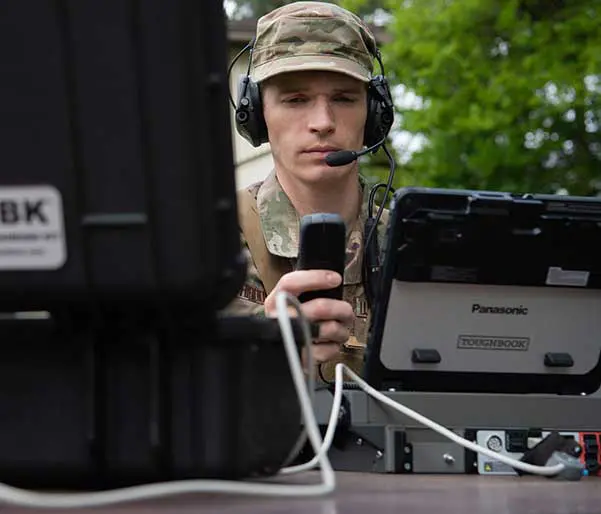
Not every system can wait for the next design cycle. Ground control stations, maintenance laptops, diagnostic systems, mission-planning devices, and other already-fielded equipment may need stronger DAR protection within the existing architecture.
Cigent Software Full Drive Encryption adds an independent encryption and authentication layer to compatible PCs, workstations, and servers without requiring immediate storage replacement for fielded systems.
A single program may include embedded storage, vehicle computers, rugged operator devices, servers, control stations, and already-fielded support systems. The right implementation may differ by subsystem, but protection should be governed by a common DAR protection strategy.
Cigent brings secure storage, Pre-Boot Authentication, Software Full Drive Encryption, centralized administration, and data sanitization together across a broad hardware and software portfolio. FSIs and mission technology partners can match protection to each subsystem while working toward consistent security and lifecycle controls across delivered configurations.
In a CSfC solution, the registration belongs to the implementing organization, which for most programs means the integrator. Cigent supports that responsibility the way a component vendor should: listed components for both layers, documentation aligned to the Data at Rest Capability Package v5.1.0, and engineering support from architecture through authorization.
When a platform will store classified data or support National Security Systems, DAR requirements can influence the architecture before the system is fielded. Cigent provides CSfC-listed components that can support both independent layers of a CSfC DAR architecture.
Integrating those requirements early gives FSIs and mission technology partners more opportunity to design secure storage, authentication, software encryption, configuration, and lifecycle controls into the platform rather than introducing them after delivery.
Once systems are fielded, configurations change. Storage devices are replaced, software is updated, systems are recovered or repaired, platforms are redeployed, and data eventually needs to be removed before transfer or retirement.
Cigent supports those transitions with a centralized administration console, deployment and update workflows, and device-level sanitization capabilities designed for sustainment and lifecycle operations.
Map the platforms, pick the components, and plan the registration with the team behind the parts.
Book a Consultation